
It is completely valid and entirely normal to feel a sense of profound anxiety when severe weather is forecasted, especially when you know your property is entirely dependent on the municipal power grid. The modern home is a highly complex ecosystem that requires a constant, uninterrupted flow of electricity to remain safe, habitable, and structurally sound. When the power goes out, the consequences extend far beyond the mere inconvenience of losing internet access or television. Within hours, a home can become dangerously cold in the winter or unbearably hot in the summer. Refrigerators and freezers warm up, leading to the rapid spoilage of hundreds of dollars worth of food. In homes that rely on well water, a lack of electricity means a complete loss of running water for drinking, cooking, and sanitation. For properties in low-lying areas, the failure of an electric sump pump during a severe storm can result in catastrophic basement flooding, causing tens of thousands of dollars in structural and property damage in a matter of hours. Furthermore, for individuals who rely on electrically powered medical equipment, a blackout is an immediate, life-threatening crisis.
There is a pervasive and dangerous misconception that power grid failures are always brief anomalies and that utility companies will invariably have the lights back on within a few hours. The factual reality is much more sobering. Across the globe, municipal electrical grids are aging, overloaded, and increasingly vulnerable. As weather patterns become more extreme and unpredictable—bringing devastating hurricanes, paralyzing ice storms, and prolonged heatwaves that demand massive air conditioning loads—the grid is frequently pushed past its breaking point. Regional blackouts can, and do, last for days or even weeks. Relying purely on hope and the public utility company is not a viable strategy for property protection.
The objective of this comprehensive guide is to empower you to take control of your property’s resilience. Preparing for a major power outage requires moving past reactive panic and embracing proactive, logical engineering. This guide provides a factual, step-by-step roadmap for assessing your specific energy needs, systematically upgrading your home’s infrastructure, and establishing a robust, failsafe backup strategy long before the sky turns dark.
Phase One: Assessing and Upgrading Your Electrical Infrastructure

Before you can even begin to think about purchasing backup machinery, you must look inward at the foundational wiring of your property. Pushing backup power through an outdated or overloaded system is not only ineffective; it is a severe fire hazard. This phase is about understanding the physical limitations of your current setup and making the necessary upgrades to handle a secondary power source safely.
Audit Your Essential Energy Load
You cannot build a resilient system without knowing exactly how much power you actually need. This requires a rigorous audit of your essential energy load. It is crucial to differentiate between the appliances you need to survive and the electronics you merely want for comfort.
-
Identify Critical Systems: Your primary focus should be on life-safety and property-preservation systems. This includes HVAC blowers, well pumps, sump pumps, refrigerators, medical equipment, and a few strategic lighting circuits.
-
Calculate Running vs. Surge Wattage: Every appliance has two power ratings. The “running wattage” is the continuous power required to keep the appliance operating. However, appliances with electric motors (like refrigerator compressors or well pumps) require a massive spike of power to start up, known as “surge wattage” or “starting wattage.” A refrigerator that runs on 700 watts may require 2,200 watts just to turn on.
-
Create a Power Budget: List every essential appliance, note both its running and starting wattage, and add them up. Your backup system must be capable of handling the total running wattage plus the highest single surge wattage that might occur simultaneously.
Modernize Outdated Breaker Boxes
Many older homes, particularly those built before the 1990s, were designed with 100-amp electrical panels. At the time of construction, this was perfectly adequate. Today, with the proliferation of smart appliances, central air conditioning, and high-draw electronics, a 100-amp panel is constantly operating near its absolute maximum capacity.
If you attempt to integrate a heavy-duty backup power system into a maxed-out, outdated panel, you run the risk of constantly tripping breakers or melting internal bus bars. In many cases, executing an electrical panel upgrade to a modern 200-amp or even 400-amp system is a mandatory first step. This modernization provides the necessary physical space and capacity to safely wire in a manual or automatic transfer switch, which acts as the critical brain directing power between the grid and your backup system.
Verify Code Compliance and Wiring Integrity
Electrical work is never the place to cut corners or rely on weekend DIY tutorials. The integration of high-voltage backup systems must be executed with absolute precision to prevent house fires and ensure your insurance policy remains valid. Before purchasing any heavy equipment, it is imperative to have highly qualified professionals evaluate your property.
By hiring experienced local electricians, you ensure that someone intimately familiar with your municipality’s specific building codes and permit requirements is inspecting your home. They will check for dangerous hidden issues like ungrounded circuits, degraded wire insulation, and overloaded junction boxes. Rectifying these foundational issues first guarantees that when your backup system kicks on during an emergency, your home’s wiring can safely absorb and distribute the load.
Phase Two: Sourcing and Sizing Backup Power Generation
Once your property’s electrical foundation is secure, you must navigate the complex landscape of power generation machinery. Buying a machine that is too small will leave you in the dark, while buying one that is massively oversized is an unnecessary drain on your finances and fuel reserves.
Select the Appropriate Generation Method
There are generally two routes for property owners: portable units and whole-home standby units. You must weigh the factual pros and cons of each based on your budget and physical capabilities.
-
Portable Units: These are budget-friendly and versatile. However, they require intense manual labor. When the power goes out, you must physically wheel the machine outside in the elements, manually connect heavy cables, safely pour highly flammable fuel into a hot engine, and manually flip the transfer switch. They are loud, need constant refueling every few hours, and generally only power a handful of essential circuits.
-
Standby Units: These are permanently installed outside your home, similar to a central air conditioning unit. They are connected directly to your home’s electrical panel and an on-site fuel supply. When grid power drops, an automatic transfer switch detects the loss, starts the engine, and restores power to the entire house within seconds, without human intervention. While significantly more expensive upfront, they offer unparalleled peace of mind, especially if you are frequently away from home.
Coordinate Professional Setup and Integration
Connecting a machine that produces thousands of watts of electricity to your home is a highly regulated process. The most critical component of this integration is the transfer switch. A transfer switch completely isolates your home from the municipal power grid before allowing backup power to flow in.
If a system is improperly wired without a dedicated transfer switch, a deadly phenomenon known as “backfeeding” occurs. This is when your machine pushes high-voltage electricity out of your house, through the utility meter, and back onto the public power lines. This can electrocute and instantly kill utility linemen who are working miles away to restore the grid. To prevent this catastrophic liability, it is strictly required to utilize certified generator installers. These specialists ensure that the physical mounting, the transfer switch wiring, and the mechanical integration meet all national safety standards and manufacturer specifications.
Ensure Clean Power Delivery for Sensitive Electronics
Electricity is not all created equal. The power that comes from the municipal grid is generally “clean,” meaning it flows in a smooth, consistent sine wave. Cheaper, lower-quality backup machines often produce “dirty” power, characterized by high Total Harmonic Distortion (THD). This erratic, jagged electrical wave is perfectly fine for running simple items like lightbulbs or space heaters, but it is deeply destructive to microprocessors.
Modern homes are filled with microprocessors—from your smart refrigerator and high-end television to the delicate circuit boards controlling your high-efficiency furnace. Feeding dirty power into these devices will cause them to malfunction or completely fry their internal components. When designing your system, look for machines that guarantee less than 5% THD. Furthermore, utilizing specialized electrical services during the installation phase can allow you to integrate whole-home surge protection and dedicated power conditioners directly into the backup loop, providing an impenetrable shield for your most expensive electronics.
Phase Three: Maintaining and Testing Your Equipment
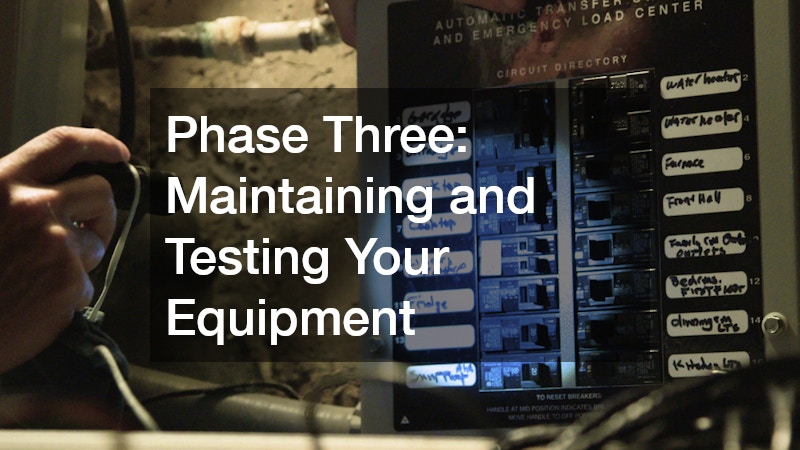
A common and highly detrimental misconception is that emergency power equipment is a “set it and forget it” investment. People often spend thousands of dollars on a state-of-the-art system, leave it untouched for three years, and are shocked when it fails to start during a blizzard. Emergency machinery is exactly that—machinery. It requires rigorous, ongoing maintenance to ensure it performs flawlessly when you need it most.
Implement a Strict Monthly Testing Schedule
Engines that sit dormant for months at a time degrade quickly. Engine oil drains away from vital components, leaving cylinders dry and prone to scoring. Moisture from condensation builds up inside the alternator block, leading to corrosion and electrical shorts.
To combat this, you must implement a strict, non-negotiable monthly testing schedule.
-
The Exercise Run: Manually activate your system or program your automatic switch to run the engine for 15 to 20 minutes every single month.
-
Testing Under Load: It is not enough to just let the engine idle. You must force the machine to actually generate and push electricity into the house (testing it “under load”). This burns off accumulated moisture inside the alternator, circulates lubricating oil to all vital engine seals, and definitively proves that the mechanical transfer switch is physically capable of engaging.
Address Mechanical Wear and Tear Proactively
During these monthly tests, you must be highly observant. Listen to the pitch of the engine. Is it sputtering or surging? Check the ground beneath the unit for fresh oil drips. Look at the digital control panel for any yellow warning lights or fault codes.
Never ignore these minor symptoms. A slight hesitation in the engine during a beautiful, sunny afternoon in July is a warning sign. If you delay addressing these issues, that minor hesitation will inevitably evolve into a catastrophic engine failure when the machine is forced to run continuously for five days during a sub-zero winter storm. Scheduling preventative generator repairs the moment you notice a discrepancy is the only way to guarantee reliability.
Schedule Annual Professional Inspections
While you can handle the monthly operational tests, complex machinery requires an annual deep dive by an expert. The constant vibration of a running engine can slowly loosen electrical connections over time, and the extreme temperature fluctuations of outdoor weather take a toll on internal components.
Make it a habit to bring in licensed electricians once a year, ideally in the autumn before the harsh winter weather arrives. These professionals will perform a comprehensive diagnostic protocol. They will safely torque all high-voltage internal connections, replace aging spark plugs and air filters, test the specific gravity and voltage of the starter battery, ensure the battery float charger is operating correctly, and verify the digital communication lines between the engine’s computer and the transfer switch inside your home.
Phase Four: Establishing a Reliable Fuel Supply Chain
Having the most advanced, perfectly maintained backup system in the world is entirely useless if you run out of fuel on the second day of a two-week blackout. Establishing a reliable, long-term fuel supply chain is often the most overlooked aspect of property preparation. You must calculate your needs accurately and build a logistical plan to keep the tanks full when regional infrastructure shuts down.
Calculate Long-Term Fuel Consumption Rates
You cannot plan a fuel strategy based on guesswork. You need hard mathematics. Every machine has a specific burn rate, usually measured in gallons per hour, which varies wildly depending on how much electrical load you are demanding from it.
-
Consult your manufacturer’s manual to find the exact burn rate at “half load” (running basic essentials) and “full load” (running everything, including central air conditioning).
-
Multiply that hourly burn rate by 24 to find your daily consumption.
-
Divide your total on-site fuel capacity by that daily consumption rate to determine exactly how many days of autonomy you realistically possess before the engine shuts down. You will likely find that a standard 100-gallon tank drains much faster than you anticipated.
Secure Bulk Contracts for Sprawling Estates
For sprawling residential estates, large homesteads, or properties with massive commercial-scale energy needs, running out to the local gas station with a five-gallon plastic jug is logistically impossible. During a wide-scale regional emergency, public gas stations lose power, their pumps shut down, and the few that remain open are plagued by mile-long lines and immediate shortages.
To circumvent this, owners of large properties must secure their supply chain in advance. This involves signing priority delivery contracts with an established industrial gas supplier. These commercial providers have massive reserves, dedicated tanker fleets, and prioritize their contracted clients during declared states of emergency, ensuring your property is continuously refueled even when the public supply chain collapses.
Explore Flexible Fuel Infrastructure Options
Storing a massive amount of fuel on-site requires specialized infrastructure. Purchasing and burying large, 500- or 1000-gallon steel cylinders outright requires a massive upfront capital investment, and as the owner, you are entirely responsible for the physical maintenance, pressure testing, and eventual replacement of that tank.
For many property owners, a more financially flexible route is utilizing a propane system rental. Leasing the heavy infrastructure from a dedicated provider drastically lowers your initial out-of-pocket costs. Furthermore, the rental agreement typically transfers the burden of liability and maintenance to the provider. If the tank develops a valve leak, or if the exterior needs rust-proofing, the provider handles it as part of the lease, ensuring your storage infrastructure remains safe and compliant without unexpected out-of-pocket repair costs.
Phase Five: Safe Storage and Refueling Logistics
Storing large quantities of highly volatile fuel on residential property introduces serious safety and logistical variables. You cannot simply drop a massive fuel tank wherever it looks aesthetically pleasing. You must adhere to strict engineering standards to prevent catastrophic accidents and ensure the fuel is practically accessible during severe weather events.
Adhere Strictly to Setback and Zoning Regulations
When mapping out your property for fuel storage, safety and legality must take precedence over landscaping preferences. Liquid fuels and pressurized gases are incredibly dangerous if mishandled.
You must take exact measurements and legally place your local propane tanks according to strict municipal zoning laws and National Fire Protection Association (NFPA) guidelines. There are non-negotiable clearance distances that must be maintained. High-capacity tanks must be situated a specific number of feet away from property lines, structural windows, exterior doors, and any potential ignition sources like outdoor fire pits, air conditioning condenser units, or overhead power lines. Furthermore, they must be protected from vehicular traffic, meaning they cannot be placed directly adjacent to a busy driveway without installing heavy concrete bollards.
Set Up Automatic Delivery Triggers
Human error is the leading cause of fuel depletion during an emergency. In the chaos of daily life, it is incredibly easy to forget to walk out to the yard and check the physical gauge on your storage tank. If a severe storm hits and your tank is only at 15% capacity because you forgot to check it last month, you are out of luck.
To completely remove human error from the equation, integrate modern technology into your supply chain. Establish a remote monitoring contract with dedicated propane services. These providers will install cellular or Wi-Fi-enabled telemetry monitors directly onto the physical gauge of your tank. These monitors constantly read the fuel level and automatically dispatch a delivery truck to your property the moment the fuel drops below a pre-determined threshold, typically 30%. This guarantees your tanks are always topped off and ready for an emergency, without you ever having to remember to make a phone call.
Prepare Temporary Refueling Corridors for Extreme Weather
Finally, you must consider the physical logistics of getting the fuel from the delivery truck into your storage tank during the absolute worst weather imaginable. Delivery drivers operate massive, heavy vehicles. They cannot navigate muddy, deeply rutted fields or drag heavy, rigid pressure hoses through four feet of unplowed snow.
You must proactively maintain clear refueling corridors on your property.
-
Winter Preparation: Ensure the path from the driveway to the storage tank is consistently shoveled and salted.
-
Storm Debris: Keep the area immediately surrounding the tank completely free of overgrown brush, decorative fencing that blocks access, and overhanging tree limbs that could snap under the weight of ice and crush the valves.
If the delivery driver cannot safely reach your tank, they will not deliver the fuel, leaving your property defenseless regardless of the contracts you have in place.
Conclusion
True resilience is not a product of luck; it is a direct result of meticulous, off-season planning and logical, factual execution. Preparing your property to withstand major, prolonged power outages is a multi-layered engineering project. It requires respecting the physical limitations of your electrical infrastructure, investing in the correct machinery, adhering to rigorous maintenance schedules, and securing a bulletproof logistical supply chain for your fuel.
There is no denying that implementing a comprehensive, automatic backup system requires a steep financial investment and a significant amount of coordination. However, this upfront cost must be weighed directly against the devastating consequences of inaction. The financial toll of a single, catastrophic event—such as gutting a flooded basement, replacing burst internal plumbing, disposing of ruined food, and paying for emergency hotel accommodations for two weeks—will almost always exceed the cost of a professionally installed backup system. Beyond the financial calculus, the absolute peace of mind knowing that your family, your property, and your livelihood are secure, regardless of what the weather does or what happens to the municipal grid, is entirely invaluable.
Do not wait until the storm clouds gather to start thinking about your property’s vulnerabilities. Once the seasonal storm warnings begin broadcasting, supply chains for heavy machinery immediately dry up, and the waiting lists for qualified professionals stretch for months. Begin Phase One today by evaluating your essential power needs and inspecting your property’s electrical panels. By taking decisive, calculated action now, you transform your home from a vulnerable dependency into a self-sustaining, resilient fortress.
